
Our partnership with various organizations continues to broaden the study of Swallow-tailed Kite habitat use in working forests. These organizations include International Paper, the American Bird Conservancy, Resource Management Service (RMS), Forest Investment Associates (FIA) and White Oak Forest Management.
This broad coalition of companies that purchase the fiber, landowners who actively manage their forests, and conservation organizations that provide expertise and guidance is an excellent example of the cooperation and coordination needed to ensure our forests can support the future needs of wildlife, local communities, and the economy.
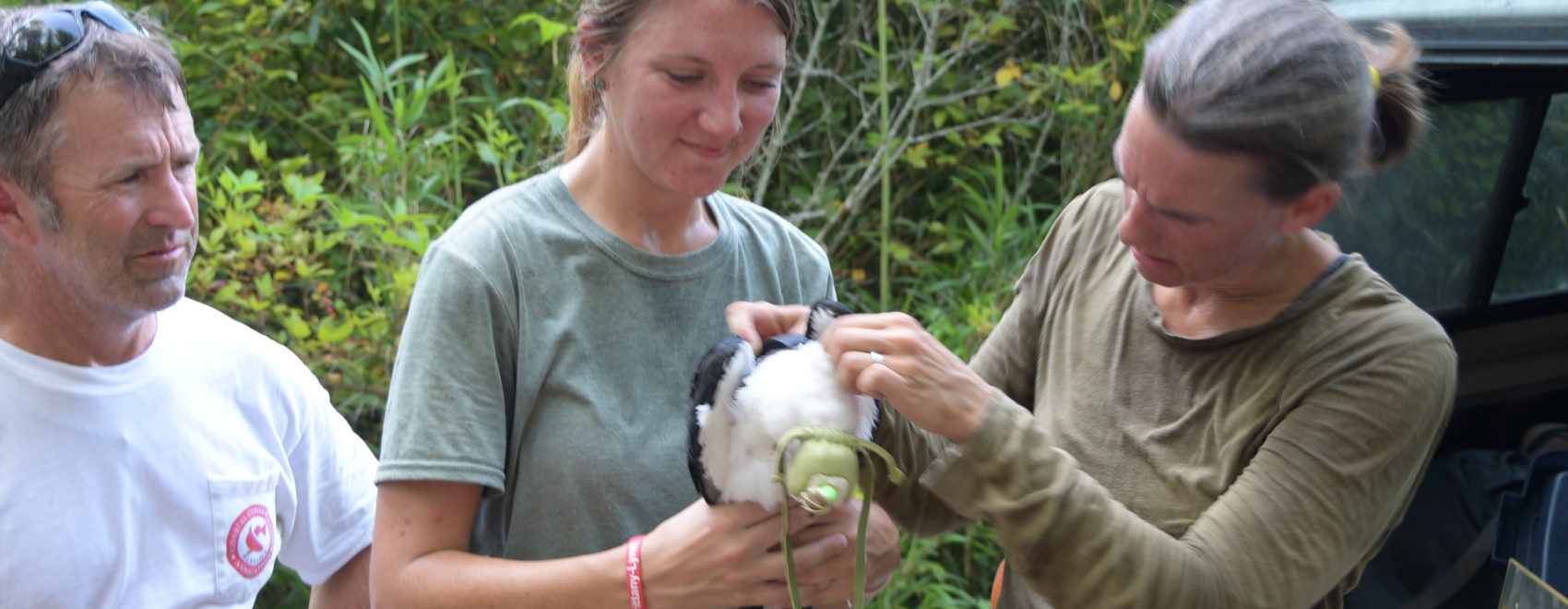
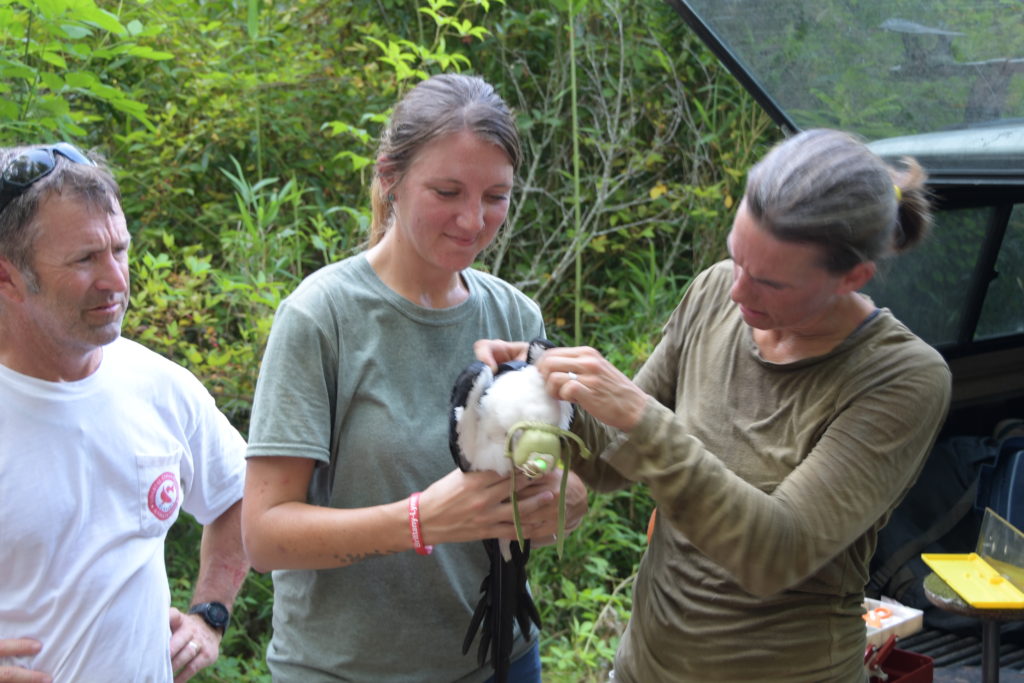
Swallow-tailed Kites were fitted with solar-powered GSM/GPS transmitters to understand their use of sustainable forests. Tagging locations were near International Paper’s mill in Georgetown, SC on forests owned by RMS and FIA, and near International Paper’s mill in Savannah, GA on forests managed by Wise Batten Inc. GSM/GPS tags are made by Cellular Tracking Technologies (CTT).
Over the next several years, the activity and locations of these GPS-tracked kites will be analyzed to further understand the specific habitats used for nesting, foraging, and roosting. This data will be critical to further inform the sustainable forest management techniques used by landowners that supply wood fiber to International Paper. By successfully managing and creating nesting and foraging habitat conditions for the Swallow-tailed Kite, countless other wildlife species that share the same habitat needs will also benefit. More information on management can be found here: Swallow-tailed Kite Forest Management Recommendations for Forest Owners.
In 2021 we tagged three Swallow-tailed Kites (named after the locations where they were tagged: Peter’s Creek, Carver’s Bay and Big Branch) that migrated to Brazil and back. Peter’s Creek returned to the exact nest site as 2021 but the nest failed early, prompting him to move to a different area. Carver’s Bay migrated safely back to South Carolina and was seen at an active nest; however, her radio had stopped transmitting. Big Branch was also tracked back to South Carolina in April 2022 before her radio stopped transmitting.
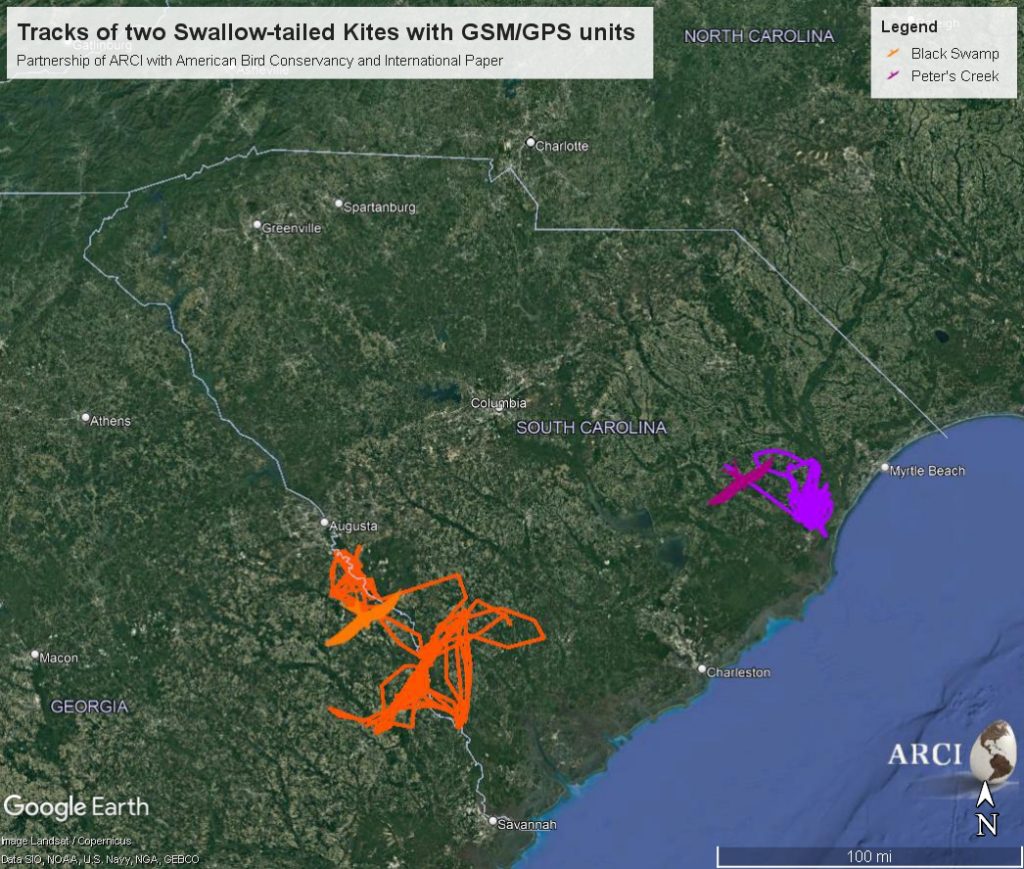
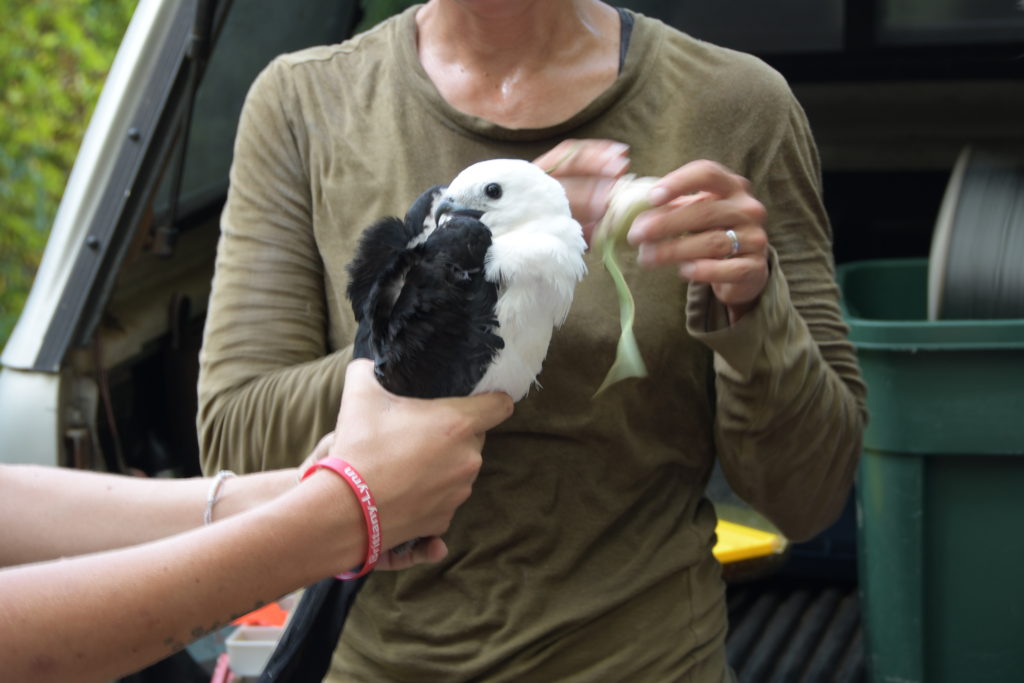
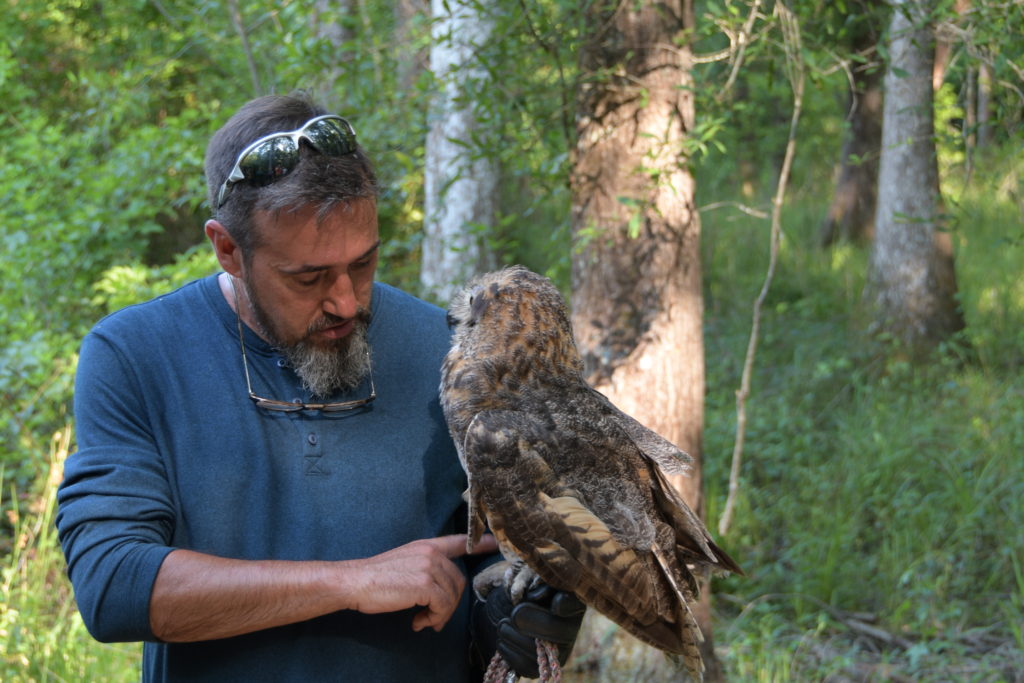
In June 2022 we captured another kite named Black Swamp after the location where it was captured near the Savannah River, 35 miles north of Savannah, GA. Numerous kites were observed at Black Swamp, indicating that additional kite nests were likely in the area. We plan to return to that area for additional work in 2023. Capturing one of these graceful fliers couldn’t be possible without the help of our Great Horned Owl friend “Nonamé” who attracts the kites to a large net. Nonamé is an education ambassador handled by Bill Hammer from the Avian Reconditioning Center in Apopka Florida.
Soon the kites will begin their migration south. The birds most likely will travel through Florida before departing for a risky flight across the Gulf of Mexico to Central America. From there they will continue overland, crossing mountains and rainforests before arriving at wintering destinations in South America. We will provide updates on their progress, revealing how these Swallow-tailed Kites make their impressive migration to their winter homes.
Leave a Reply