
We are delighted to continue our Swallow-tailed Kite remote tracking research partnerships with the Palm Beach Zoo & Conservation Society and Palm Beach County’s Department of Environmental Resources Management (ERM). Following is the tracking and nesting update on Palm Beach County Swallow-tailed Kites in 2024:
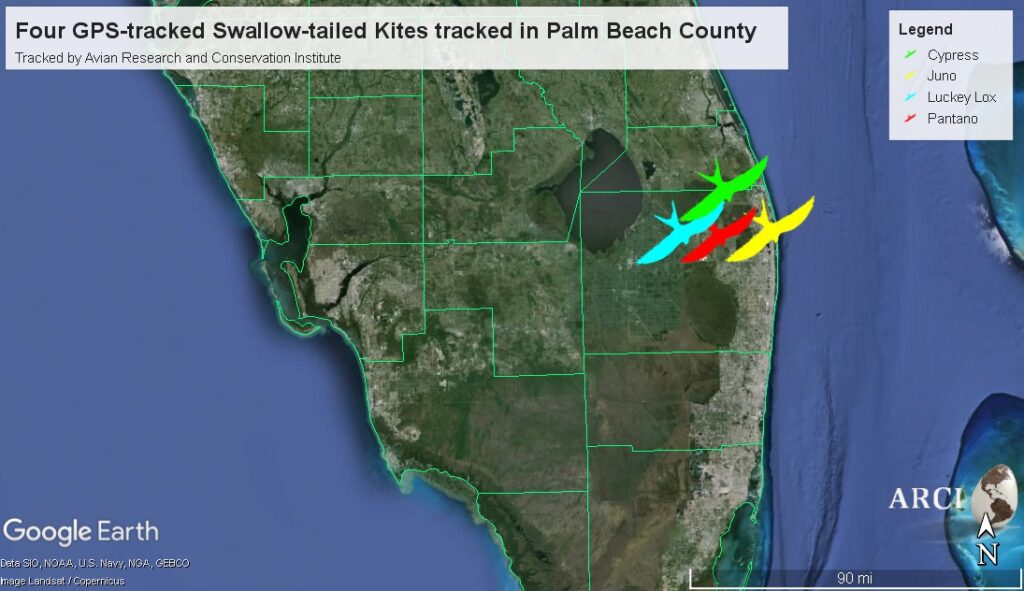
Juno, a female tagged in 2022 successfully raised a chick this season.
Luckey Lox, a female tagged in 2023, and Cypress, a male tagged in 2022, most likely had successful nests this season as well.
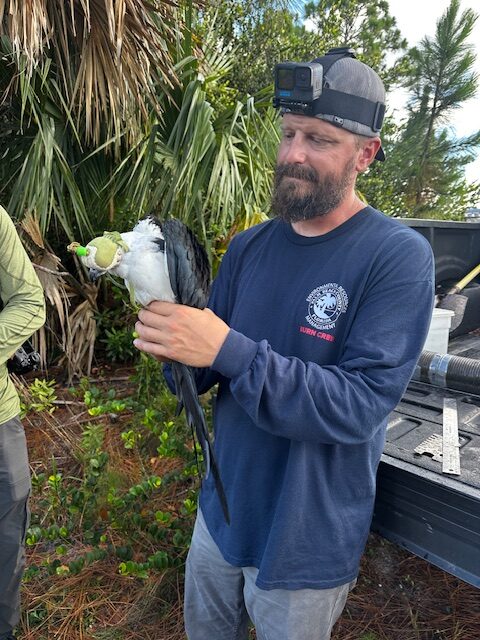
Lox 22, a female tagged in 2022, nested in a new location this season. When we saw the battery was losing power and GPS fixes were all in a small area, we went there on foot for a closer look. We found feather remains and the transmitter on the ground underneath a Swallow-tailed Kite nest. There were eggshell fragments as well. Good chance that she was depredated by a Great Horned Owl. Although it is tragic to lose a kite, especially one that is part of a tracking study, at least were able to conclude her fate and that she nested. Great Horned Owls are a top predator of Swallow-tailed Kites and often, as in this case, will kill and eat adults incubating or brooding on a nest at night. These adults are often females. Most often in our tracking studies, birds’ transmitters stop transmitting in inaccessible locations like the Gulf of Mexico or over the Amazon rainforest, thousands of miles away. We are fortunate to have this data point despite the loss.
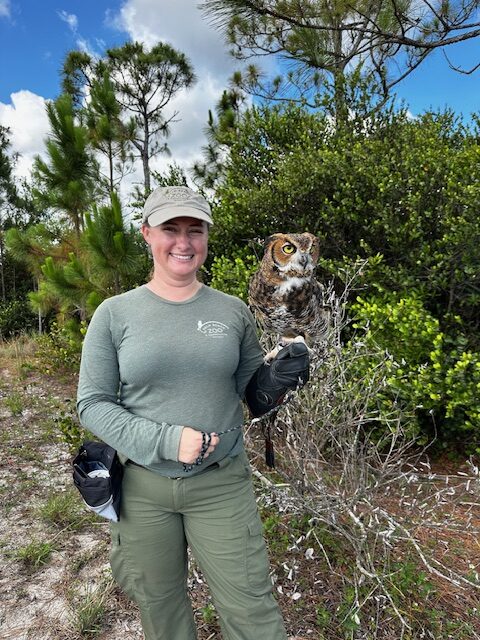
In May we put a GSM-GPS unit from Cellular Tracking Technologies (CTT) on an additional adult female Swallow-tailed Kite from the county’s ERM properties, and we named her “Pantano.” Pantano’s breeding areas was discovered and monitored by ERM staff and volunteers. Palm Beach Zoo & Conservation Society staff brought the zoo’s animal ambassador “Hino”, a Great Horned Owl trained for educational programs, to assist with our capture efforts.
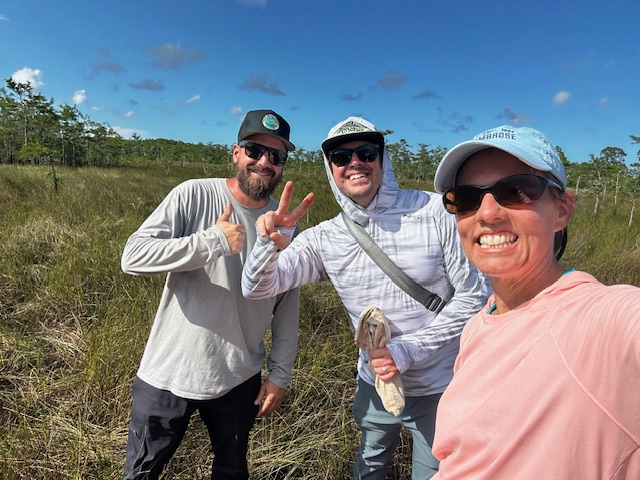
We’ll be following these four Palm Beach Swallow-tailed Kites this pre-migration season as they move to areas where they can gorge on abundant insect food and acquire the necessary fat to make for their migration to South America. In the process, many of the kites we tag find each other at communal roost sites and foraging aggregations across the southeastern U.S. before beginning their southbound migration.
You can report your sightings of Swallow-tailed Kites during our annual population monitoring window July 15 to August 10: Here
Palm Beach Zoo & Conservation Society, in conjunction with long-time Zoo sponsor Florida Power & Light Company, have generously provided funding for the solar-powered GSM-GPS transmitters needed to continue this vital conservation effort.
Swallow-tailed Kites were captured and tagged under proper Federal and State agency permits.
This is just fantastic information I can share with guests on my tours, friends and family. We see them on Babcock Ranch, where I work as a wildlife tour guide, all the time. Wish I could be a part of it. Thank you!