
Avian Research and Conservation Institute (ARCI) has partnered with the American Bird Conservancy (ABC) and Orleans Audubon Society (OAS) to study Swallow-tailed Kite habitat use on working timber forests in the southeastern United States. This work has been supported by International Paper (IP), and more recently, by a grant from the National Fish and Wildlife Foundation (NFWF) titled: Birds: Ambassadors for Enhancing Conservation Value on Private Forest Lands.
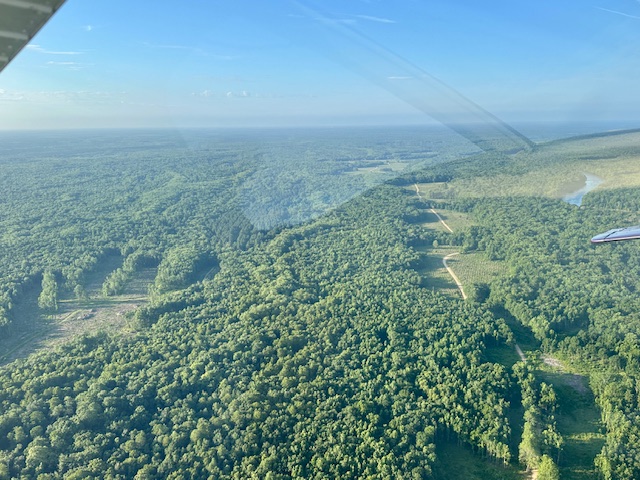
We are working with forestry companies including Resource Management Service (RMS), Forest Investment Associates (FIA), White Oak Forest Management, PotlachDeltic Corporation and many small, private landowners in the southeastern United States. This broad coalition of partners consists of companies that purchase wood fiber, the landowners who actively manage their forests, and conservation organizations that provide expertise and guidance. The partnership is an excellent example of the cooperation and coordination needed to ensure our forests can support the future needs of wildlife, local communities, and the economy.
We are in our fifth year of following GPS-tracked Swallow-tailed Kites in the Southeastern US with this project. To understand the kites’ use of sustainable forests, we will follow tagged kites activity and locations within IP’s mill basins, and we will be able to recognize their use of specific habitats for nesting, foraging, and roosting. These data will be critical to further improving the sustainable forest management techniques used by landowners that supply wood fiber to International Paper (more on Swallow-tailed Kite Forest Management Recommendations for Forest Owners). By successfully managing and creating nesting and foraging habitat conditions for Swallow-tailed Kites, many other wildlife species that share the same habitat also will benefit.
Updates on the flying research team tagged by ARCI in Georgia and South Carolina:
Peter’s Creek: Male, tagged in 2021, from Georgetown County, South Carolina. Fledged one chick in 2025.
Simmon’s Creek: Male, tagged in 2023, from Georgetown County, South Carolina. Made it safely back to breeding grounds and most likely had a successful nest.
Snuffbox Canal: Male, tagged in 2023, from McIntosh County, Georgia. Fledged one chick in 2025.
Barrington: Male, tagged in 2023, from McIntosh County, Georgia. Presumably had a successful nest.
Sweet Water: Female, tagged in 2024, from Burke County, Georgia. Presumably had a successful nest.
This year ARCI captured an additional adult male Swallow-tailed Kites in McIntosh County, Georgia near the Altamaha River. We’ve named him Townsend.
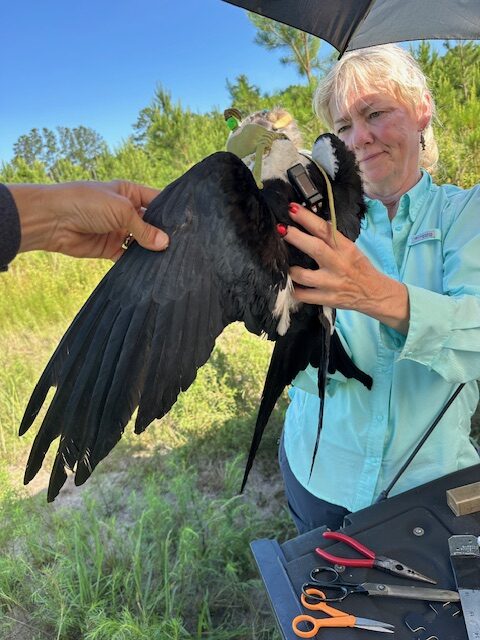
*All captures, banding and tagging of Swallow-tailed Kites are done safely under current federal, state and local permits.
We’ll be following these six Swallow-tailed Kites during the pre-migration season as they move to areas where they can gorge themselves on abundant insect food and acquire the necessary fat to prepare for their migration to South America. In the process, many of the kites find each other at communal roost sites and foraging aggregations across the southeastern U.S. before beginning their southbound migration.
You can help us during the annual population monitoring window right now (July and August) by reporting your Swallow-tailed Kites sightings here.
We are grateful to all the partners, organizations, landowners, and volunteers that have made this Swallow-tailed Kite research possible. A big thank you to EJ Williams of ABC for many hours of nest monitoring and trapping; Georgia DNR’s Andy Day, Erin Cork, and Tim Keyes for nest finding and tagging assistance; and additional assistance from Gianna Arcuri of ARCI.
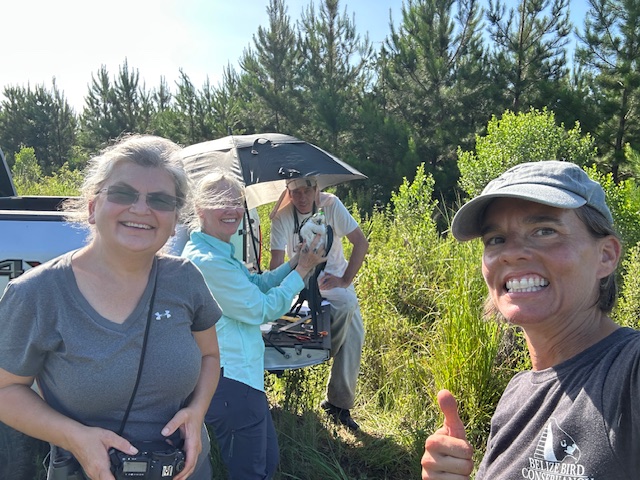
Swallow-tailed Kite tagging crew in McIntosh County, Georgia. From L to R: Laurel Barnhill of USFWS, EJ Williams of ABC (holding hooded kite prior to release), and Andy Day of GADNR, join ARCI’s Gina Kent.
Leave a Reply