ARCI is following GPS-tracked Swallow-tailed Kite through a partnership with the Palm Beach County’s Department of Environmental Resources Management (ERM) and the Palm Beach Zoo & Conservation Society. A recent highlight of this partnership is the creation of the film “Tracking Kites” produced by ERM and directed by Benji Studt. See the film trailer and recent press.
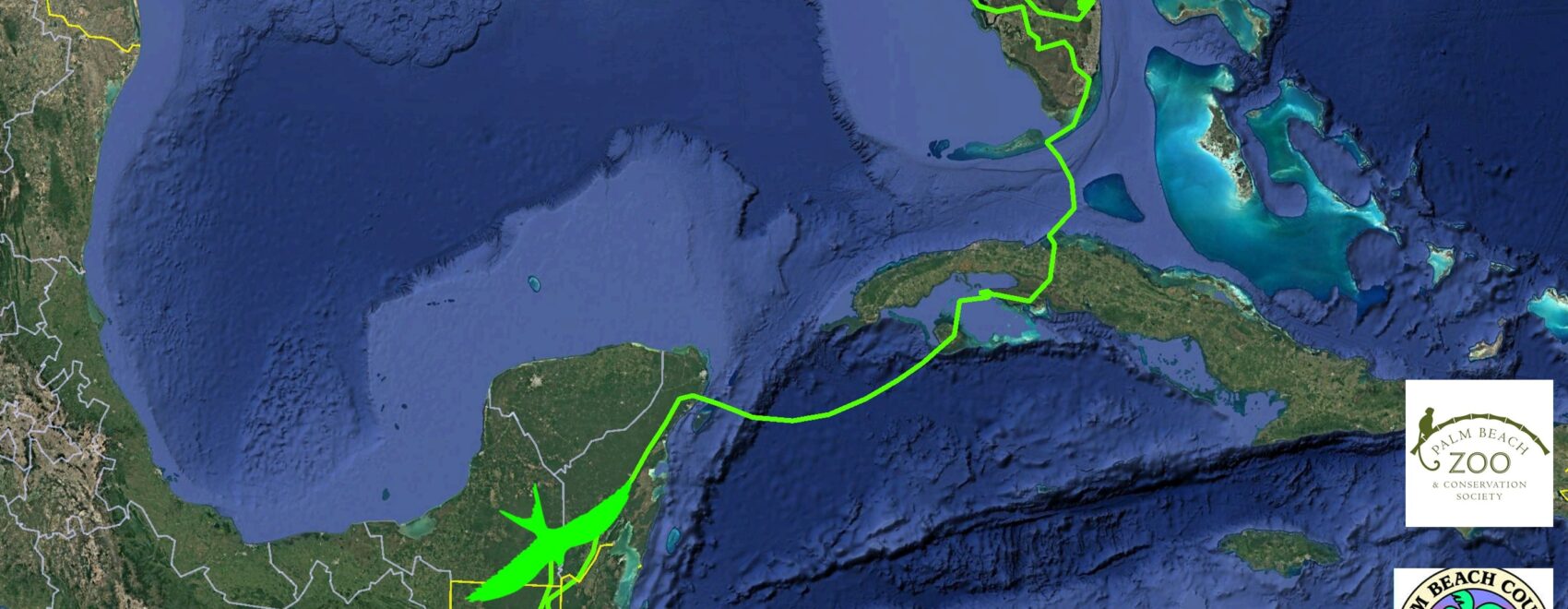
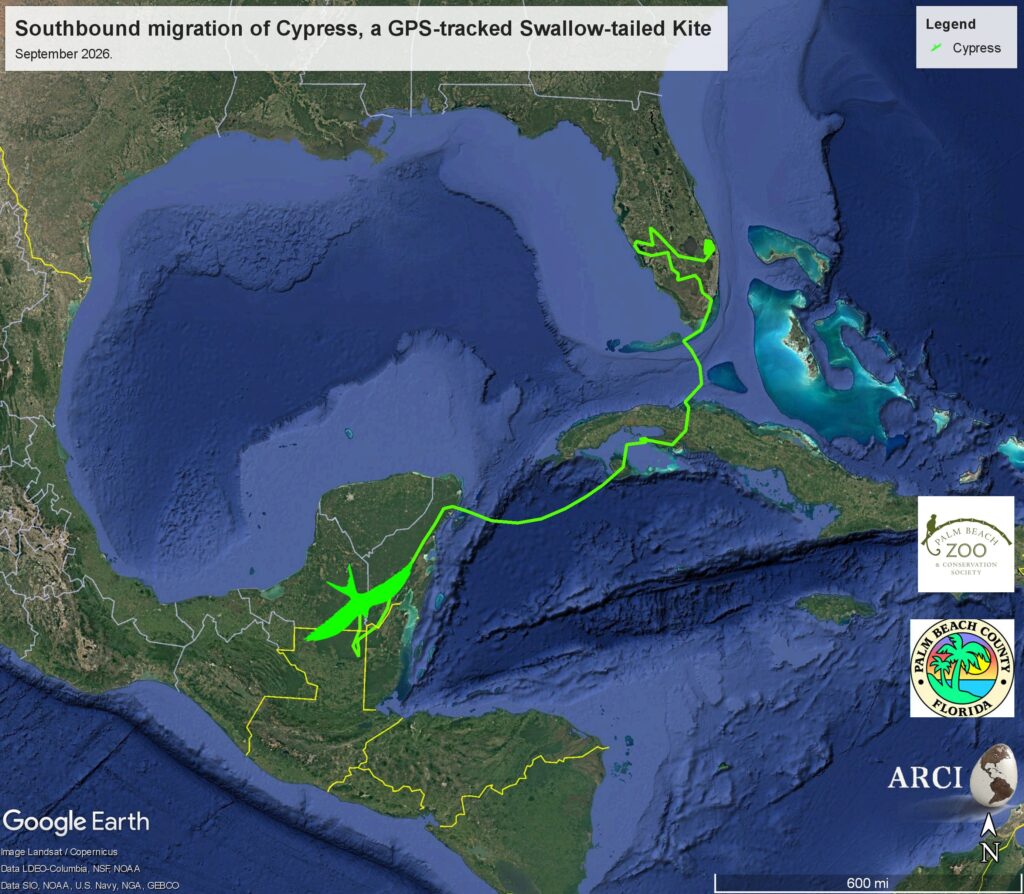
One of the Swallow-tailed Kites we are tracking from Palm Beach County is Cypress, a male tagged in 2023. Cypress was the last of the GPS-tracked Swallow-tailed Kites to leave Florida in 2026. He stayed in Palm Beach County Florida the entire breeding and pre-migration season until August 29, four days before he flew south to Cuba. First he flew southwest around Lake Okeechobee to spend a night on the Peace River in Hardee County, another night close to Cape Coral in the Myakka State Forest, another night in South Hendry County before his final night in Florida near the Atlantic coast in a Miami suburb on 1 September.
The morning of 2 September, Cypress flew along the coast and Florida Keys through Marathon where he turned south and arrived on Cuba in the middle of the night. After resting, and once the sun was up, he continued south to the Zapata Peninsula spending another night prior to flying to Quintana Roo, Mexico. He arrived south of Cancun, Mexico in the early morning hours of 5 September. Currently, he is still spending a stopover in the Yucatan.
ARCI tracks Swallow-tailed Kites not only to monitor the roosts, foraging areas, stopover sites, and winter destinations, but also to see how they use public and private lands, and how they survive throughout the Southeastern States. We are grateful for our funders and project partners for making this research possible.
Palm Beach Zoo & Conservation Society, in conjunction with long-time Zoo sponsor Florida Power & Light Company, have generously provided funding for the solar-powered GSM-GPS transmitters needed to continue this vital conservation effort.
You can report kite sightings here:
All banding and tagging is done by the Avian Research and Conservation Institute under the current federal, state, and local banding permits.
Leave a Reply